CryptoWins Account and KYC
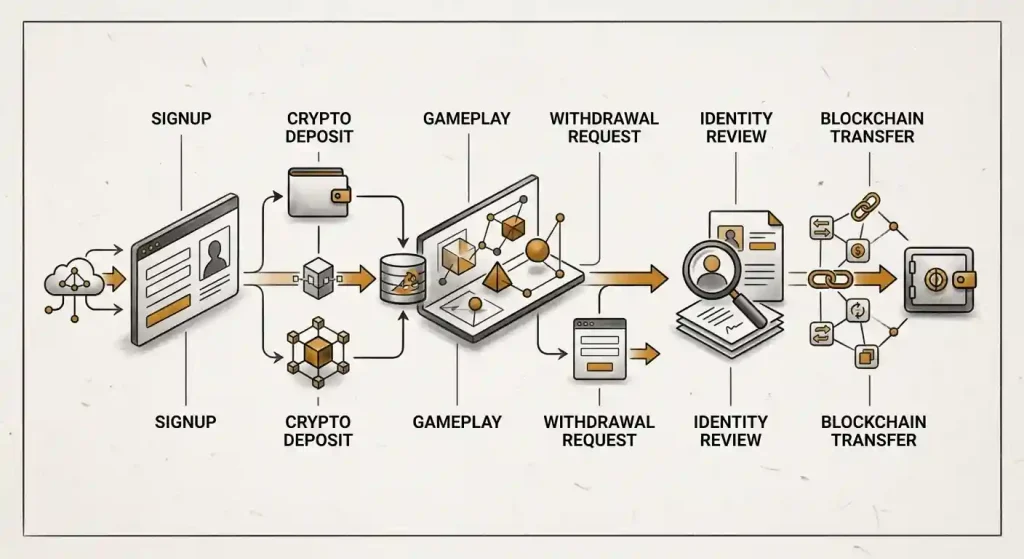
Table of Contents
- Signup is described as light on verification at the start
- Verification pressure increases when money leaves the account
- An account should be judged across its full lifecycle
- Good account hygiene reduces avoidable review friction
- Crypto records make the payment trail easier to document
- CryptoWins account and KYC questions answered
- CryptoWins has a light entry path, but cashout can still trigger verification
Section element
Signup and verification lifecycle
CryptoWins is described as allowing users to start without mandatory verification, while identity, address, and payment checks can be requested later—especially when funds are withdrawn or a transaction triggers additional review.
Section element
- SignupNo mandatory verification reported at the start
- Withdrawal checksCan include ID, address and payment details
- Higher-friction casesLarger or risk-triggered cashouts
- Best descriptionLight upfront verification, not guaranteed no-KYC
Signup is described as light on verification at the start
Public coverage describes CryptoWins registration without a mandatory identity-verification step before the account can be used. That lowers friction at the beginning of the account lifecycle, but it does not remove the possibility of later checks.
The important distinction is timing. “No mandatory verification to start” describes the front door of the account. It does not describe every later stage. A player can register and deposit with minimal document friction, then face a review when attempting to withdraw.
Registration stage
The account can be opened without a mandatory upfront identity check according to public coverage.
Funding stage
Crypto deposits can be made under the cashier rules described in the payments guide.
Withdrawal stage
Identity, address, or payment-method checks can be requested before funds are released.
Verification pressure increases when money leaves the account
The withdrawal stage combines account ownership, payment history, and anti-fraud controls. That makes it a natural point for additional checks, especially when the cashout is larger or another risk trigger is present.
Public coverage specifically mentions identity, address, and payment-method verification. Those categories are ordinary ways to connect the person controlling the account with the payment activity attached to it. They also explain why a player who encountered little friction at signup can still experience a pause later.
| Account stage | Typical friction described | Practical implication |
|---|---|---|
| Signup | No mandatory verification reported at the start | Account creation can be relatively light. |
| Deposit | Crypto payment flow | Keep wallet and transaction records consistent with the account. |
| Withdrawal request | Identity or address checks can be requested | A cashout may pause while documents are reviewed. |
| Larger or risk-triggered cashout | Greater chance of additional review | Prepare for more scrutiny before funds are released. |
The dedicated withdrawal guide covers the separate $25 minimum, recurring limits, network fees, and the fact that the commonly cited 24-hour timing is not a guaranteed deadline.
An account should be judged across its full lifecycle
A signup-only view can be misleading because the most consequential friction often appears later. The complete path runs from registration to deposit, gameplay, withdrawal request, possible identity review, and final blockchain transfer.
- Create the account. Public coverage does not describe a mandatory identity-verification gate at this first step.
- Fund the account. Crypto transactions create wallet records and transaction hashes that should be kept.
- Use the account normally. Keep account and payment details consistent rather than changing key information midstream.
- Request a withdrawal. This is the stage where ID, address, or payment evidence can be requested.
- Complete any review. Larger or risk-triggered cashouts can receive more scrutiny.
- Track the blockchain transfer. Once a transaction hash exists, the payment has moved from account-side processing to the crypto network.
This sequence explains why “no-KYC” is too broad a label. The account can be light at the beginning and still require verification when money exits.
That timing also changes how a player should prepare. A document request that arrives only after a withdrawal can feel unexpected if the signup process created the impression that identity checks were irrelevant. The safer assumption is that verification can remain dormant until the account reaches a money-out event or another review trigger.
Consistency matters more than speed. If the account profile, wallet records, and any requested documents all point to the same person and transaction history, the review has a clearer evidence trail. Changing personal details or using records that do not line up can create extra questions even when the underlying account activity is legitimate.
Good account hygiene reduces avoidable review friction
No checklist can guarantee that a withdrawal will skip review, but consistent records make a requested check easier to complete. The core idea is simple: the person, account, and payment trail should line up.
Keep ready
- Readable identity documents if requested.
- Proof of address if requested.
- Wallet or payment records connected to the account.
- Transaction hashes for deposits and withdrawals.
- Support messages if a review takes longer than expected.
Avoid avoidable mismatches
- Different personal details across account and supporting records.
- Old or unreadable documents during an active review.
- Unclear wallet ownership records when a payment-method check is requested.
- Assuming that previous withdrawals guarantee identical treatment later.
A practical folder or note for each withdrawal can include the request amount, asset, destination address, date, account status, support case number, and transaction hash once one exists. That is not a requirement from CryptoWins; it is a simple way to keep account-side events separate from blockchain-side events if a withdrawal takes longer than expected.
The distinction becomes especially useful with larger withdrawals, because those are among the situations where additional checks can be more likely. A clean record does not guarantee faster approval, but it makes it easier to answer a request without reconstructing several transactions from memory.
Crypto records make the payment trail easier to document
Blockchain transactions usually provide a transaction hash, timestamps, sender and recipient addresses, and the transferred asset. Those records can help distinguish an account-processing delay from a completed on-chain transfer.
If a withdrawal remains pending inside the account, the issue is still on the casino side. Once a transaction hash exists, the next step is to track the network and destination wallet. That separation is useful when talking to support because it identifies which stage needs attention.
- Account record
- Shows the withdrawal request and its current status.
- Support record
- Shows what explanation or document request was provided.
- Transaction hash
- Shows whether a crypto transfer has actually been broadcast.
- Destination wallet
- Shows whether the transfer has arrived after network settlement.
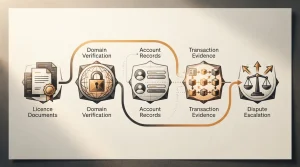
A navigation link to the license page is available for readers who also want the site’s separate regulatory and dispute context.
When support asks for verification, answer the specific request rather than sending unrelated documents. A narrow, complete response is easier to review than a large bundle of files with no clear connection to the withdrawal. If the request changes, keep each new requirement in the same timeline so you can see what was asked, when it was supplied, and whether the account status changed afterward.
That record also helps separate a document-review delay from a blockchain delay, which are handled through different evidence and different follow-up steps.
CryptoWins account and KYC questions answered
Does CryptoWins require KYC to sign up?
Public coverage describes registration without mandatory verification at the start. That does not guarantee a verification-free account lifecycle.
Can CryptoWins request ID when I withdraw?
Yes. Identity, address, and payment-method checks can be requested at withdrawal, especially for larger or risk-triggered cashouts.
Is CryptoWins a no-KYC casino?
That label is too broad. The better description is that mandatory verification is not reported at signup, while checks can still appear later at withdrawal.
What should I prepare before a larger withdrawal?
Keep identity and address documents readable and make sure account and payment details are consistent. A withdrawal can take longer if a review is triggered.
Where can I read about withdrawal limits?
The CryptoWins withdrawal page covers the $25 minimum, reported weekly and monthly limits, fees, timing, and verification triggers.
CryptoWins has a light entry path, but cashout can still trigger verification
The useful account model is chronological: no mandatory verification is reported at signup, while identity, address, and payment checks can be requested later, especially at withdrawal or on larger and risk-triggered cashouts. That makes “light upfront verification” a more accurate description than “no-KYC.” Keep account and payment records consistent, save transaction hashes, and be prepared for a document request before a larger withdrawal is released.